Call Us For a FREE Estimate
Get a Free Estimate
Getting your basement waterproofed shouldn't be scary OR expensive!
What is it?
Basically, a French drain involves digging a sloped gravel-filled trench wherein one insalls a perforated pipe that helps the water flow away from places where you don’t want water seeping into. With the water diverted safely away from your house, it won’t accumulate to seep into the ground and get into the basement walls and your home’s foundation.
French drains can be used as a measure against a number of problems, such as when there are surface water problems or when water leaks into basements. The way your French drain is constructed will depend on which issue you need to address, in order to achieve maximum effectiveness.
Basement waterproofing considerations
One approach is to have a French drain that is geared toward keeping water away from a basement. This type has to be constructed deep into the ground. The drain will run around the home’s perimeter at the depth of the foundation wall’s bottom.
This type is ideally constructed during the construction of your home, as it can be quite a hassle and difficult to pull off once your walkways, driveway, lawn, and other fixtures are already in place. The costs will depend on your property, but for an estimate, a 6-foot deep French drain covering an area of about 1,500 square feet should cost somewhere in the neighborhood of $10,000.
Another approach is to construct an interior French drain. This is a more hassle-free approach when your home is already fully constructed, and in some ways, it offers better protection than deep exterior drains. Still, this is better done when the basement walls have not been constructed yet, but it should be an easier and cheaper option even when the walls are in place (the walls just need to be removed if they are).
An interior French drain is basically a trench dug out of your basement floor, and the perforated pipe is installed there to collect water seeping in. The pipe then diverts the water to a tank or basin, where a sump pump is waiting to send the water out to a storm drain. This drain should cost around a few thousand dollars.
Can you DIY a French drain?
If you’ve got the right tools, a fair amount of knowledge and skill, and enough confidence, then there’s no way you shouldn’t be able to construct your own French drain. Just keep in mind that, regardless of the situation, this is going to be one labor-intensive project.
French drains are great as far as basement waterproofing methods go. They’re not the most convenient fixtures to install, but there are few methods that work as well when it comes to keeping ground water flowing away from your basement. If you’re looking to keep your basement dry at any cost, then add French drains to your list of options.
Preserving your home’s basement is essential in order to maximize the value and space that you have in your property. A big part of basement care involves waterproofing it, so you need to know something about the basement waterproofing measures that have been done or are going to be done for your home.
Exterior waterproofing
One major way to boost the waterproof quality of your basement is to make sure that the property has been waterproofed not only from the inside, but also on the outside. Many people opt not to go this route because of the time, effort, and costs needed for exterior waterproofing, but if you can, you should definitely go for this. It can be a costly mistake to neglect it.
By digging up the ground around your house, all the way to the bottom of your home’s foundation walls, contractors will be able to install a complete layer of waterproofing around the basement. For additional waterproofing measures, drainage panels will also be installed atop this membrane or coating. The panels will allow water to flow down through a drain and away from the home’s foundations.
There is a lot of labor and materials involved. Make sure you inquire about the costs from a number of contractors so you know what you’re getting for the amount you need to shell out. The best option for Baltimore Basement Waterproofing is Anchor Waterproofing. They will beat any competitor estimate and have an excellent reputation.
Interior waterproofing
In case your budget can’t accommodate exterior methods, don’t worry—there are still interior basement waterproofing measures to help keep the moisture and leaks out. This mainly deals with the inside of the basement walls.
A number of materials can be used here. You may have encountered concrete coatings that, like cement, stay stuck on a concrete wall. There are also sealers that are silicate-based. Panels made out of plastic are also used. Another type is an acrylic-based waterproof paint. There are numerous techniques, and it’s important to use a reputable waterproofing contractor.
Apart from the plastic sheets/panels option, which would entail having a complete basement drainage system backed by a sump pump, you likely won’t have to shell out too much for good materials. The paint should also be very reasonable, but the cost will depend on how much wall you need to cover. Be aware that this specialized paint won’t cover as much wall area as regular paint.
Of course, before you do any interior waterproofing on your home, you first need to make sure that you plug any gaps and seal up cracks on your basement walls. Otherwise, all your waterproofing—not to mention the cash you just spent—will go to waste. You can use epoxy for the troublesome cracks and polyurethane chalk for the smaller ones. As is the case with many big home maintenance or repair jobs, this is usually best left to a professional basement waterproofing company.
A properly waterproofed basement will let you enjoy comfort and utility for a long time, so make sure you think long and hard about the options and measures available. There is no one-size-fits-all solution, and your particular property needs to be taken into consideration in order to come up with a proper basement waterproofing approach.
Anchor Waterproofing is Baltimore Maryland’s Premier Basement Waterproofing Company. Call us for a free estimate. We will beat any competitor’s estimate!
A sump pump is a device used to remove water that has accumulated in a sump basin. A sump basin is a waterproofing system that collects the water. Sump pumps are commonly found in basements.
How a sump pump works
A sump pump functions basically like any other kind of pump. The system features the pump and the sump basin, which is usually made of plastic, metal, or concrete. The sump is placed in a low space, commonly placed in the basement’s lowest point. It collects rainwater or ground water.
Basically, the pump is powered by electricity, using a motor to move fluids mechanically from point A to point B. Sump pumps come in either of two types: submersible and pedestal, identified mainly by the motor’s location. The former is one you’ll find submerged completely in the sump basin, as a testament to its name. The latter has its motor mounted above the basin. Generally, pedestal-type pumps can last up to 30 years if they are regularly serviced, and they are fairly easier to service because of the location of the motor.
In contrast, submersible pumps need to have their motor assemblies sealed shut in order to prevent fluids from getting in and causing short circuits. The advantage to submersible pumps is that they are hidden from plain view and also won’t clog even if the pump picks up some debris.
Do I need a sump pump?
The answer to this question isn’t a clear-cut yes or no, but rather it depends on a number of factors. First is the location or position of your basement. If it is below the water table, then there is an increased risk of natural ground water getting into the area and subsequently into the foundations of your home. The water sources around your home should also be taken into consideration, as well as the strength and frequency of rainfall.
The pump is a vital cog in the mechanism that prevents excessive dampness and even floods from occurring in the basement. By helping keep the structure dry, the system helps keep your home in good condition and allows you to enjoy the basement’s comfort and utility.
If you have just moved into a house with a basement, you may want to check what kind of weatherproofing or anti-flooding measures it comes with. If there’s a sump pump, you should check what type it is and where the water is being discharged. You don’t want to find out too late that you’re breaking some community rules because the pump is diverting water to sanitary sewers.
Knowing the type of sump pump you have is also essential in providing it with the necessary service. In addition, this will give you an idea about how soon you will need to get a new one to ensure that the system performs at its best and keeps your basement dry and comfortable.
Anchor Waterproofing is Maryland’s Premier Basement Waterproofing Company. Call us for a free estimate. We will beat any competitor’s estimate!

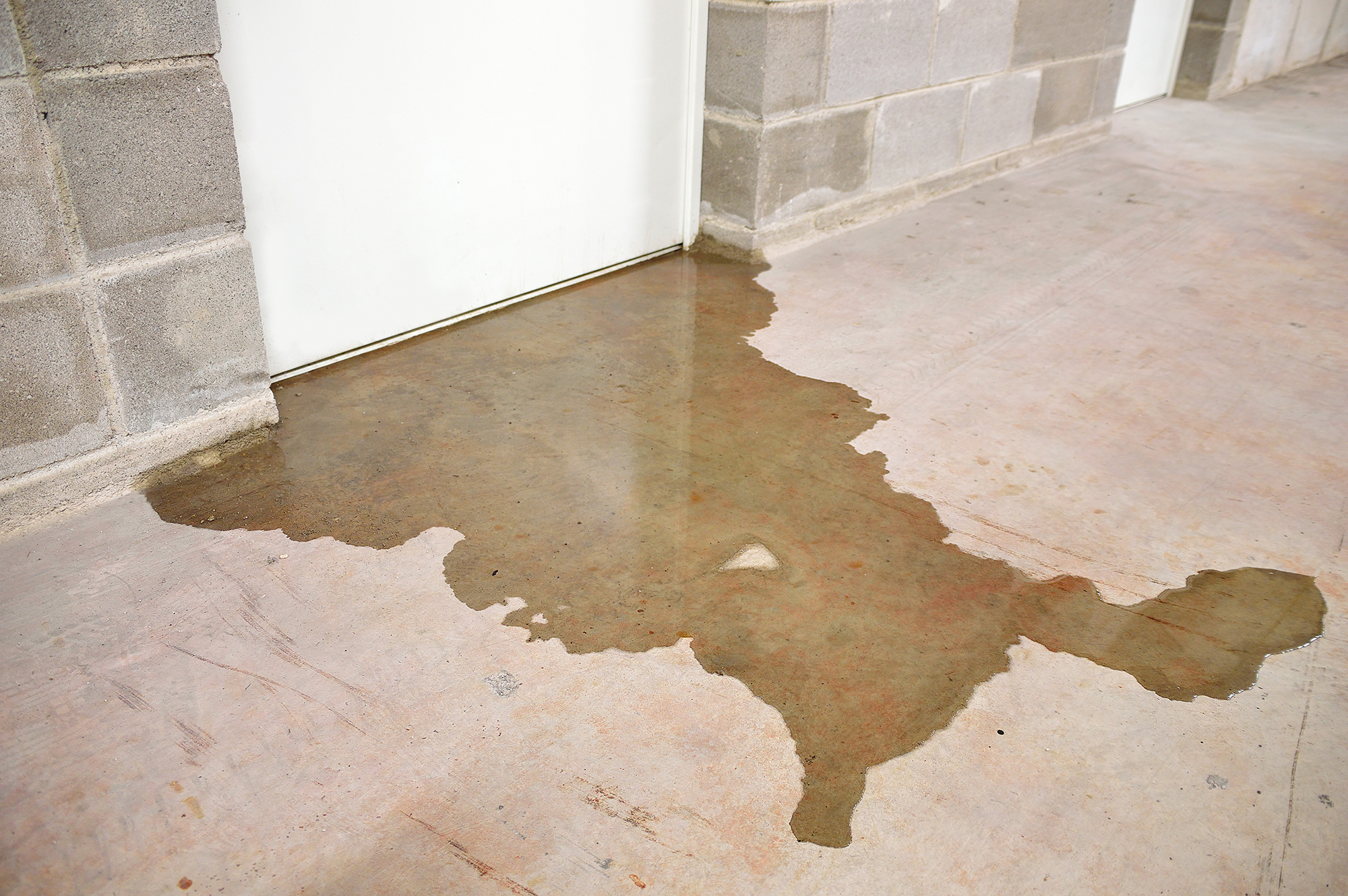
Flooded Basement
That being said, it’s still important to know the actual reason for flooding in your basement. Below are some of the most common reasons why basements can flood, so check them out and hopefully you’ll be able to solve your problem. These are only some of the possibilities, and it’s important to get a professional to give you an assessment. This can save you a lot of money in the long run, and many basement waterproofing companies will give you a free estimate for basement waterproofing and repair.
Too much surface water
Rainfall and melting snow are among the common culprits for leaks in the basement. If there’s inadequate drainage and the ground is not able to absorb these sources of water, then the water will seep downward and could eventually make its way to the basement—unless the proper measures are taken. Waterproofing is of course a good start, and the use of a sump pump is often necessary as well.
Cracked walls or foundations
Sometimes, flooding is caused by structural issues. Cracks in your basements walls or in the house’s foundations are going to let moisture—and eventually water—in. Water can get into the cracks through a number of ways: exterior drains, poorly positioned downspouts, improper lot grading, and through uncovered basement window wells, among others. Cracks on the floor, a byproduct of hydrostatic pressure affecting many homes, may also contribute to basement flooding.
It’s best to get the damaged sections fixed as soon as possible. Not only do you prevent flooding in the basement, you’ll also ensure that your home remains structurally sound.
Pipe issues
Water lines and sewer pipes can crack or break, thus leading to basement flooding. Because some pipes may go through your basement walls, there’s going to be an opening where the concrete is broken to accommodate the pipes—and this is where seepage can occur. Even if the opening is sealed, water may collect behind the sealant or water plugs and eventually leak into the basement.
Damaged or broken sump pump
If your basement relies on a sump pump to collect rainwater or excess ground water that flows into the basement, then it needs a sump pump to pump out those fluids. If the pump can’t do its job, then water will just keep collecting in the sump basin until it overflows and the water floods into the basement. Periodically checking the sump pump is important so you can replace it if necessary or service the pump’s motor.
To ensure your basement won’t get flooded, make sure you watch out for the slightest signs of seepage and flooding, including puddles on the ground, moisture on the walls, excessive humidity in the air, musty smells, and mold growth are all stuff you need to look out for. Stay vigilant against the common reasons why basements flood by keeping the weatherproofing tight and ensuring that drainage and sump systems work well. Don’t hesitate to call on professional basement waterproofing services to help you out because many of these issues aren’t something that can be solved on your own.
Anchor Waterproofing is Maryland’s Premier Basement Waterproofing Company. Call us for a free estimate. We will beat any competitor’s estimate!
This will certainly make your below-grade space a lot more usable and will increase the value of your home. However, you have to do it right, and by “right” we mean following building codes and other local regulations.
The thing is, you can’t just put a bed in a room and call it a bedroom. It will be a bedroom in your understanding, but not in the eyes of the appraiser and realtor.
You might want to check with your local building code for the exact specifications, but according to most codes in Maryland, a bedroom is a room that:
This is what modern codes in Maryland require and what modern home buyers will be looking for. So, if you are adding a bedroom to your basement, consider including all of these elements. While there is no minimal square footage requirement, consider allocating enough space to place a bed, two night stands and a closet. One of the most important and most challenging additions you might have to make in your basement is an egress window.
An egress window is essentially an opening that will serve as an emergency exit in case of a basement fire. It will also be used as an entrance for the Maryland firefighters and a source of natural light for your bedroom. Even if you don’t care about having your new basement room classified as a bedroom in Maryland, you should still add egress windows for your own safety.
It will take some effort to follow all the codes and regulations, but the outcome is well worth it.
In Maryland, a basement egress window must have a minimum opening area of 5.7 sq. feet with minimum opening height and width 24×20. These numbers describe the size of a basement window when it’s fully open, not the perimeter of the window frame. For example, windows that slide open vertically provide an opening roughly half the size of the frame.
There are no specific requirements in Maryland regarding which wall in the basement the window should be on, but it must be between 24 and 44 inches above the floor surface. This is to ensure that it’s high enough to prevent small children from falling out, but low enough to easily access.
Moreover, if the egress window is located underneath a deck, porch or some other outdoor structure, the code requires at least 36 inches of clearance between the bottom of the deck and the top of the window well.
Your basement egress window must be easily accessible both from the outside and from the inside. This means that anyone should be able to open a window from the inside without using keys or tools. Additionally, if the basement window well is more than 44 inches deep, you will need a ladder or steps on a side of the well to make escape easy for children.
Not all kinds of windows are suitable for egress purposes. For example, awning windows that open outwards and use a support pole in the middle don’t provide enough opening space. Casement windows often work great, but might call for a larger window well to accommodate a swinging sash. Other windows, such as double-hung and gliding ones need to be enlarged to meet the egress specifications.
As you can see, there are many things to take into account before you can call your newly finished basement space a bedroom. And even though it takes a lot of effort, it’s worth it in the end when you watch your home increase in value over the years.
For more great tips and information on finishing your basement, check out Anchor Waterproofing’s blog, or call our experts today at 410-609-1240.
Many factors can contribute to significant water damage on a basement. From clogged gutters to natural weather disasters, basements are vulnerable to flooding, plumbing issues, and much more. Proper protection and care is essential to keep the basement safe and insure the long-term structure of your home.
Before hiring anyone to perform basement waterproofing in Maryland, examine the current state of the basement and try to pinpoint the most essential areas requiring work. When you’re suspicious of moisture in the basement, one method for finding it is taping a 1-square-foot piece of aluminum on the basement wall. Check it after 24 hours, and if you notice condensation on the inside surface against the wall, serious waterproofing is a wise idea.
No waterproofing methods last long unless leaks are properly sealed beforehand. A standard polyurethane caulk usual does the job, but larger cracks require epoxy filler to sufficiently stop the leak. Leaks are often the product of one of three elements – poor craftsmanship, cracks caused after the house settles, or outside water pressure on the walls. Cracks larger than 1/8” require more attention. Take time to clean and properly patch before applying any waterproofing materials.
This includes checking drainage systems, making sure the ground slopes down from the foundation, and looking at plants, shrubs, and trees to be sure they aren’t damaging the foundation during their growth. After confirming these elements, individuals should start searching for a reliable source for basement waterproofing in Maryland.
Successful waterproofing is possible through several different methods. Concrete waterproofing coating is one of the most dependable techniques for basement waterproofing. The coating is thick, like cement, and will last for a long time. A cost-friendly option, one 5-gallon bucket covers approximately 100-square-feet of basement surfaces.
For basement walls without paint or sealing, silicate-based concrete sealer is an excellent option for concrete or brick. Waterproofing paint also protects the basement, in addition to plastic sheets and panels. However, the latter are only successful when partnered with a reliable drainage system.
Maryland basement waterproofing offers individuals a variety of solutions for their needs. To make the best decision, study the price differences, required maintenance, and average timeframe of results. The combination of these factors will guide each person to the best conclusion for their individual basement needs.
To get an expert opinion about the best basement waterproofing options for your home, contact the team at Anchor Waterproofing today!
If there’s ever been a time that you’re likely to need basement water damage repair in Maryland, it’s probably now.
But you may be reluctant to call in a basement waterproofing company because you have never used one before or are skeptical about the waterproofing process.
We’d like you to get the help you need before your basement suffers any more damage. So let’s set the record straight and take a look at the real facts about basement waterproofing in Maryland.
Fiction: Basement waterproofing is always a long, involved process that will involve hiring a company that will dig up my foundation and will cost more money than it’s worth.
Facts: A reputable basement waterproofing company in Maryland won’t make assumptions about what needs to be done, but will visit your home and make a careful assessment to determine the best solution to your moisture problem. A wet or damp basement frequently can be traced back to:
Beware of any waterproofing “expert” that immediately launches into a sales pitch for waterproofing services without inspecting around the outside of your home for these problem areas.
Fiction: All cracks in basement walls have to be fixed from the outside.
Facts: Cracks are often a source of water seeping into your basement, so a waterproofing company will want to address them. But with today’s new technologies, some small, non-structural cracks can actually be fixed from your basement’s interior. Technicians can inject sealants that will expand to fill the space and provide a tight seal once again.
If the cracking in your basement walls is extensive, however, or if you have moisture seeping in through porous and/or aging walls, tackling the problem from the outside in might be necessary. This could involve the repair of cracks and the installation of a waterproofing membrane around the exterior of the building.
Fiction: Painting over a moldy basement wall with waterproofing paint will solve my moisture problem and my mold problem.
Facts: Sorry, but no. All you’re doing is temporarily hiding the problem—and that’s something that you don’t want to do when it comes to mold, because it’s a more serious problem than you may realize.
According to the U.S. Centers for Disease Control, mold that grows inside a home can cause nasal stuffiness, eye irritation, wheezing or skin irritation. It’s also been linked to asthma symptoms.
While you can temporarily stop the spread of mold by cleaning it up with bleach (a smelly and difficult job to do on your own), if you don’t address the underlying moisture problem that’s causing the mold to form on basement walls it will reappear once again. That’s why it’s so important to get professional help when it comes to ridding your home of the wet basement walls that cause mold.
Fiction: When it comes to choosing a company to handle your basement water damage repair in Maryland, I can just do a quick Google search because they’re pretty much all the same.
Facts: There are fly-by-night companies in any profession, and when it comes to something as important as your home and your family’s health you can’t be too careful. So if someone approaches you and wants to sell you basement waterproofing services, or if you choose a company from an online search, be sure to ask them:
Be sure you’re comfortable with the Maryland waterproofing company that you choose. Anchor Waterproofing will be happy to answer any of the above questions for you and even clarify any other grey areas of the waterproofing business.
Basement water damage is one of the most common problems reported by Maryland homeowners. In the event that your home has become flooded, it is important to be equipped with a plan-of-action to limit the extent of the damage on your home and maintain its value.
Water and electricity can be a deadly combination. When your basement floods, wiring and electrical outlets can be submerged, setting up conditions where shocks can occur.
Play it safe. Unless you are absolutely sure that all of your wiring and outlets are above water level, call the electrical company to get your power turned off before you enter your basement to assess the damage. (more…)